

Demand Planning & Forecasting Boot Camp
w/ Hands-On Predictive Analytics and Use Of Big Data Workshop
Chicago, Illinois, USA | March 12–14, 2025
An Interactive Immersive Experience You Can’t Afford to Miss
WHO THE EVENT IS RIGHT FOR
The IBF Boot Camp is a 2 or 3-day session for planning professionals looking for a concrete, best practice view of demand planning, S&OP/ IBP and the forecast process. It will lead you through an understanding of your current forecasting software and the techniques it uses.
IBF will provide expert instruction that will both introduce newcomers to the most used tools and processes, while enhancing the capabilities of long time forecasters, S&OP/ IBP, demand planning, and analytics professionals. You’ll also expand your professional network and improve your knowledge at this unique and powerful, one-of-a-kind event.

WHY YOU MUST ATTEND
Days 1 and 2
- Prepare for IBF certification through a comprehensive review in an interactive classroom environment
- Learn leading methods of demand forecasting, then reinforce your learning through hands-on examples in Excel
- Implement data-driven decision-making to improve supply chain and financial performance through better forecasts, order fill rates, inventory turns, and cash flow
- Learn how to leverage your software’s full capabilities, understand how it works, and correctly interpret the outputs … while networking with others in your field
Day 3
- Build on Days 1 & 2 through knowledge of machine learning methods that include neural networks, cluster analysis, decision trees, and market basket analysis
- Enrich your understanding of machine learning and statistical data mining through hands-on exercises to predict demand, its drivers, and events (Online web app, Excel macros, Python, R)
Bottom line: Attending this event will make you more valuable in your current position and in the industry overall.
Become a Certified Professional Forecaster (CPF)
Use what you learn from this IBF event to become a Certified Professional Forecaster.
Simply select the CPF CERTIFICATION PACKAGE during check-out and gain access to the event, along with preparation materials, and three CPF Exams.
The CPF program is the gold standard in demand planning certification, identifying you as a value driver in demand planning, forecasting and S&OP. It places professionals in the elite group of forecasters, with many CPFs saying it helped them secure a new job, promotion and pay raise. Find out more about the CPF program, or register below.

“When I moved companies, being CPF certified helped me not only land a job, but get the compensation I was looking for.”
Keyamma Garnes, CPF
DIRECTOR OF DEMAND PLANNING

REGISTER NOW
- Full admission Demand Planning & Forecasting Boot Camp (March 12 and 13)
- Hands-On Predictive Analytics and Use Of Big Data Workshop for an additional cost
- Continental breakfast and lunch
$2,099 $1,999
You can add an IBF Membership and CPF Certification when you register. IBF Members receive $100 off registration, not to be combined with other discounts.
PLUS Get the 4th person free for every 3 registrations.
Speakers
- Eric Wilson, ACPF
- Sara Brumbaugh

Institute of Business Forecasting & Planning
Director of Thought Leadership
Eric is a predictive analytics and business planning innovator, author, teacher and speaker. As Director of Thought Leadership at IBF, he brings over 20 years of experience, previously leading demand planning at Escalade Sports, Berry Plastics, and Tempur Sealy. Eric is an IBF Advanced Certified Professional Forecaster (ACPF) and received IBF’s Excellence in Business Forecasting & Planning award in 2016. He is a frequent speaker and panelist who has published extensively in The Journal of Business Forecasting and APICS Magazine. Eric is also the author of Cultural Cycles, Predictive Analytics for Business Forecasting & Planning, and Practical Guide to Sales & Operations Planning (S&OP/ IBP).

Managing Principal
Ceres Analytics
Sara Brumbaugh is Managing Principal of Ceres Analytics, a consultancy specializing in applied mathematics, statistics, and machine learning. Sara’s roots are in business forecasting: she’s worked with the IBF for over 20 years, and is the 2015 recipient of IBF’s Lifetime Achievement Award. Sara’s work in predictive analytics began with construction of forecast drivers to predict stock returns. Her recent work supported genetic brain research at Harvard Medical School. Other recent work includes, patent-pending algorithms to detect financial fraud, and genetic models to predict success of cancer chemotherapy. Sara holds a masters in Economics from Florida State University, and is a currently pursuing a second masters (Biology) at Harvard University.
Schedule
Schedule
- Day #1: March 12, 2025
- Day 2: March 13, 2025
- Day 3 (Optional): March 14, 2025
Introduction to Business Forecasting, Planning & Leadership
| 8:00 AM – 9:00 AM | Morning Refreshments & Registration |
| 9:00 AM – 11:00 AM | MODULE 1: Fundamentals of Business Forecasting & Planning 9:00 AM – 11:00 AM S&OP Overview Demand Planning Overview Why do Businesses Forecast and Plan? Summary |
| 11:00 AM – 11:15 AM | Morning Break |
| 11:15 AM – 12:00 PM | MODULE 2: The Forecasting Process and the Roles of Cross-Functional Team Members Learning Objectives Forecasting Process & Roles of Cross-Functional Team Members Marketing Finance Supply Chain/Production and Logistics Human Resources Natural Biases Summary |
| 12:00 PM – 12:45 PM | MODULE 3: Consensus Forecasting & the Communication Process Learning Objectives Problems of Multiple Number Plans Consensus is Critical Best Communication Practices Gaining Upper Management Buy-In Agenda Reporting Forecasts Presenting Forecasts Summary |
| 12:45 PM – 1:30 PM | Lunch |
| 1:30 PM – 2:15 PM | MODULE 4: Driving Business Value Learning Objectives Major Characteristics of S&OP S&OP Monthly Cycle Timeline Ingredients of Successful S&OP Process Summary |
| 2:15 PM – 3:00 PM | MODULE 5: External Collaboration and CPFR Learning Objectives What is CPFR CPFR Model CPFR: Challenges and Keys to Success CPFR Benefits Summary |
| 3:00 PM – 3:15 PM | Afternoon Break |
| 3:15 PM – 5:00 PM | MODULE 6: Data Management Learning Objectives What you Need to Know about Data Univariate Time Series Model Elements Pattern Recognition: Linear Patterns Exponential Smoothing Models Data Analysis Random Noise Forecastability Analysis Data Analysis Checklist Summary |
How To’s
| 9:00 AM – 10:30 AM | MODULE 7: Performance Metrics Learning Objectives Why we Need Performance Metrics Forecast Error Measurements Forecast Value Added Analysis (FVA) Things to Know About Forecasting Errors Improve Forecasts: Remove Barriers Summary |
| 10:30 AM – 10:45 AM | Morning Break |
| 10:45 AM – 11:30 AM | MODULE 8: Selection and Applying Forecasting Models Learning Objectives Types of Models Factors Impacting Forecasting Balancing Statistics with Other Important Considerations Exception Management Strategies Model Selection Process Summary |
| 11:30 AM – 12:15 PM | MODULE 9: Averaging Models Learning Objectives Naive Model Commonly Used Time Series Methods Average Level Change Average Percent Change Weighted Average Percent Change Moving Average Model Single Moving Average Level Change Single Moving Average Percent Change Summary |
| 12:15 PM – 1:00 PM | Lunch |
| 1:00 PM – 2:30 PM | MODULE 10: Trending, Seasonal and Cyclical Models Learning Objectives Classical Decomposition Seasonality Deseasonalizing the Data Formula for Computing Trend Value (T) Preparing Forecasts Summary |
| 2:30 PM – 3:00 PM | Afternoon Break |
| 3:00 PM – 4:00 PM | MODULE 11: Exponential Smoothing Models Learning Objectives Exponential Smoothing: Introduction Single Exponential Smoothing Formula Exponential Smoothing: Different Alpha Values Single Exponential Smoothing Rules of Thumb Pattern Recognition & Exponential Smoothing Models Summary |
| 4:00 PM – 5:00 PM | MODULE 12: Other Forecasting Models Learning Objectives Sales Ratio Methods: Average & Cumulative Family Member/Top Down Forecasting Causal Models When to use Judgmental Models Summary |
Predictive Analytics & Mining Big Data
| 8:00 AM – 12:30 PM | Hands-on Predictive Analytics And Using Big Data Workshop: Uncovering Value In Your Data INTRODUCTION | THE QUANTITATIVE SKILL SET Statistics vs. Machine Learning Descriptive vs. Predictive Analyses DATABASES, DATA EXTRACTION, AND DATA ASSEMBLY Databases Transactions Customer Attributes Other Structured Query Language (SQL) Basic Query Structure Example: Recency, Frequency, Monetary (“RFM”) External Drivers Sample Queries DESCRIPTIVE TECHNIQUES Overview: row-wise vs. column-wise operations Exploratory Data Analysis(with outlier detection) Time series (univariate plots) Probability distributions Scatter plots Correlation matrices and their visualization Cluster Analysis (machine learning and statistical approaches) Market segmentation Product segmentation Principal Components and mining data for key factors PREDICTIVE TECHNIQUES Overview: statistics, machine learning, and their combination Regression Analysis (Continuous Outcome) Automated variable selection (statistical approaches) Machine learning alternative: Neural Networks Logistic Regression (Yes/No Outcome) Automated variable selection (machine learning approaches) Receiver Operator Curve and the Probability Cutoff for Yes/No Example—forecast driver creation (“% of customers likely to…”) Machine learning alternative: Decision Trees ASSOCIATION RULES (MARKET BASKET ANALYSIS) PUTTING IT ALL TOGETHER EXTRA CONTENT (TIME PERMITTING): INTRODUCTION TO SCRIPTING IN PYTHON, R, VBA OR T-SQL |
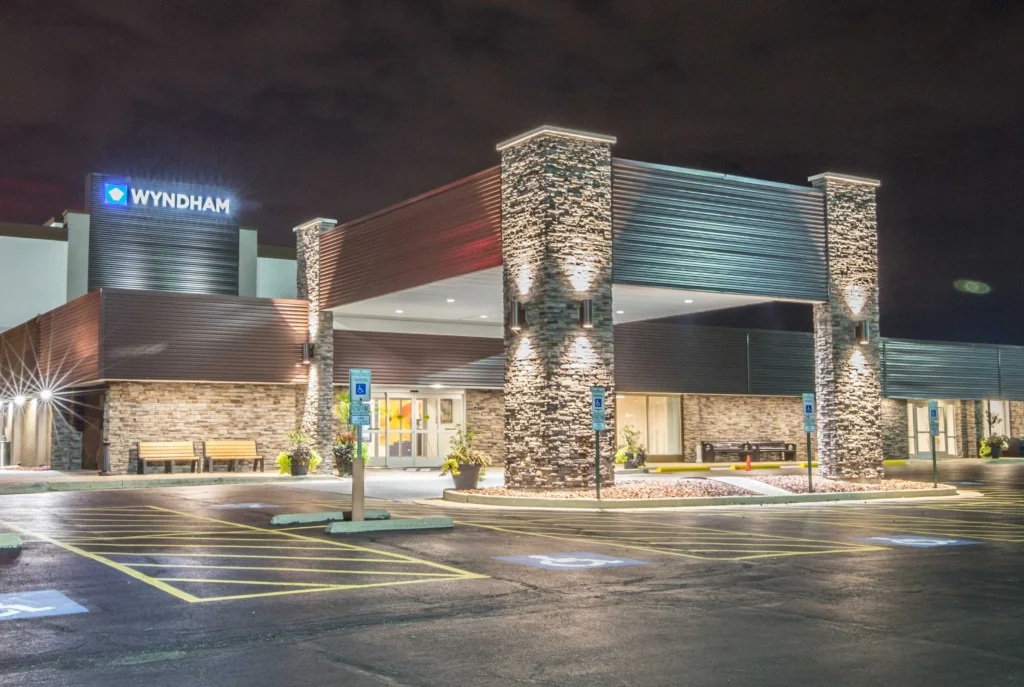
Location and Lodging
If you have any issues, please contact support@ibf.org for assistance.